
An English garden is a romantic, naturalistic style characterized by lush, layered planting, winding paths, and a harmonious blend of flowers, shrubs, and trees. Key elements include: herbaceous borders (mixed perennials), winding paths, focal points (ornaments, benches, urns), and a mix of formal and informal elements. Use a soft color palette of pastels (pinks, purples, blues, whites) with accents of vibrant colors. Include classic English garden plants: roses, lavender, foxgloves, delphiniums, peonies, hollyhocks, and climbing plants. English gardens are designed to be enjoyed from multiple viewpoints and change with the seasons. They're romantic, relaxing, and full of charm.
What you will need
Understand the English Garden Style

What is an English garden: A romantic, naturalistic style that blends formal and informal elements. It's characterized by lush, layered planting, winding paths, and a harmonious mix of flowers, shrubs, and trees.
Key features: Herbaceous borders (mixed perennials), winding paths, focal points (ornaments, benches, urns), and a mix of formal and informal elements.
Color palette: Soft pastels (pinks, purples, blues, whites) with accents of vibrant colors (reds, oranges, yellows).
History: Originated in 18th-century England as a reaction against formal French gardens. It was inspired by the naturalistic paintings of artists like Claude Lorrain.
The feeling: An English garden should feel romantic, relaxing, and harmonious—designed to be enjoyed from multiple viewpoints.
Include Classic English Garden Plants

Roses: Climbing, shrub, and old-fashioned roses are essential. Varieties: David Austin roses, Gertrude Jekyll, Rosa gallica.
Lavender: Fragrant, drought-tolerant, and attracts pollinators. Varieties: English lavender, Hidcote, Munstead.
Foxgloves: Tall spires of bell-shaped flowers. Self-seed freely. Varieties: Digitalis purpurea, Camelot.
Delphiniums: Tall spires of blue, purple, or white flowers. Varieties: Pacific Giants, Magic Fountains.
Peonies: Large, fragrant blooms in spring. Varieties: Sarah Bernhardt, Festiva Maxima.
Hollyhocks: Tall spires of flowers in summer. Varieties: Alcea rosea, Nigra.
Other classics: Lupines, phlox, campanulas, yarrow, dianthus, and hardy geraniums.
Shrubs: Boxwood, hydrangeas, viburnum, and buddleia add structure.
Create a Lush, Layered Border

Back layer (Tall plants 4-6 ft): Hollyhocks, delphiniums, foxgloves, and tall phlox.
Middle layer (Medium plants 2-4 ft): Roses, lavender, peonies, lupines, and hardy geraniums.
Front layer (Short plants under 2 ft): Dianthus, campanulas, creeping phlox, and herbs.
Planting style: Plant in drifts (groups of 3-5) for a natural look. Let plants mingle and self-seed.
Contrast: Combine bold foliage (hostas, ferns) with fine-textured plants (lavender, ornamental grasses).
Add Winding Paths and Hardscaping

Paths: Use winding paths made of gravel, stone, or brick. Curves create a sense of discovery.
Trellises and arbors: Support climbing roses, clematis, and sweet peas. Add height and structure.
Focal points: Add benches, urns, statues, or birdbaths to draw the eye and create interest.
Hedges: Use clipped hedges (boxwood, yew) to define spaces and add structure.
Lawns: A small, manicured lawn provides a visual break from the lush planting.
Choose a Romantic Color Palette
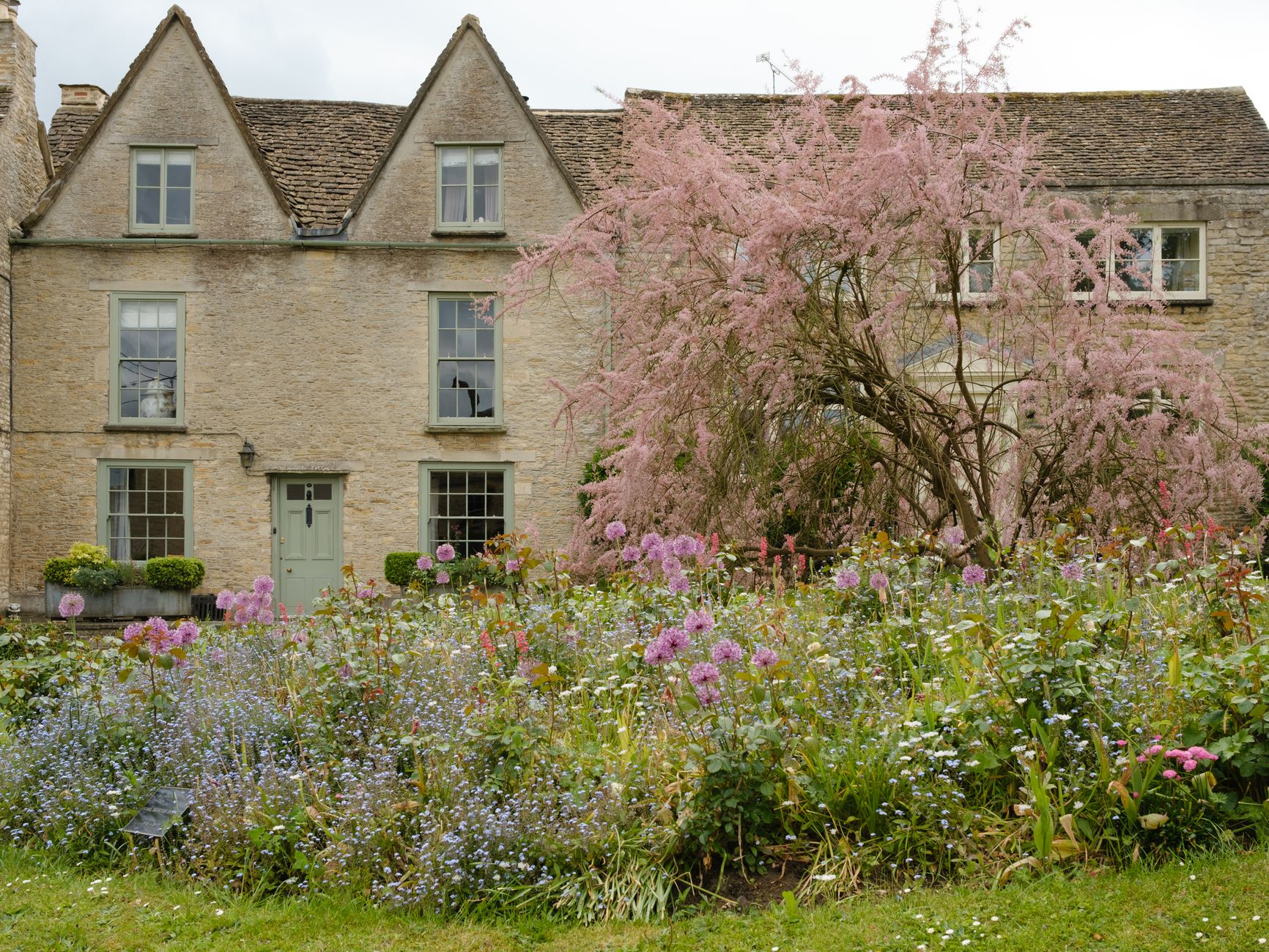
Classic palette: Soft pinks, purples, blues, and whites with pops of reds, oranges, and yellows.
Monochromatic: Use different shades of one color (e.g., all pink) for a sophisticated look.
Complementary: Use colors opposite on the color wheel (e.g., purple and yellow) for contrast.
White accents: White flowers brighten shady corners and add elegance.
Foliage: Use silver, gray, and variegated foliage for contrast (lavender, artemisia, dusty miller).
Plan for Year-Round Interest

Spring (March-May): Tulips, daffodils, alliums, bleeding hearts, and early-flowering perennials.
Summer (June-August): Roses, lavender, peonies, delphiniums, foxgloves, and phlox.
Fall (September-November): Sedums, asters, ornamental grasses, and fall foliage.
Winter: Evergreen structure from boxwood, ivy, and hardy ferns. Seed heads from perennials add winter interest.
Fragrance: Include fragrant plants (roses, lavender, dianthus) for sensory appeal.
Prepare and Plant

Soil preparation: Remove weeds and add 2-3 inches of compost.
Planting time: Plant in spring or fall for the best results.
Spacing: Plant closer than recommended for a lush look—plants will fill in quickly.
Water: Water well after planting and keep the soil moist until established.
Mulch: Apply 2-3 inches of mulch to retain moisture and suppress weeds.
Maintain Your English Garden

Watering: Water deeply once a week during dry spells.
Deadheading: Remove spent flowers to encourage reblooming.
Pruning: Prune roses and shrubs in late winter or spring.
Dividing: Divide overcrowded perennials every 3-4 years.
Staking: Stake tall plants to prevent flopping.
Fertilizing: Apply compost or balanced fertilizer in spring.
Common problems and fixes
| Problem | Likely cause | What to do |
|---|---|---|
| Plants look sparse | Not planting densely enough. | Add more plants and allow self-seeding. |
| Garden looks messy | English gardens are natural—embrace it! | Deadhead and prune to keep it manageable. |
| Weeds taking over | Not enough mulch or dense planting. | Apply 2-3 inches of mulch and plant more densely. |
| Not enough color in fall | Not planning for fall interest. | Add sedums, asters, and ornamental grasses. |
Gardener's checklist
Test what you learned
What is the hallmark of an English garden?
Answer: Lush herbaceous borders
Which plant is a classic English garden plant?
Answer: Rose
What is the typical color palette for an English garden?
Answer: Soft pastels with vibrant accents
What type of paths are typical in English gardens?
Answer: Winding and natural
What should English garden paths be made of?
Answer: Gravel, stone, or brick
Common questions
What is the difference between a cottage garden and an English garden?
Cottage gardens are more informal and packed with flowers, while English gardens are more structured with defined borders, paths, and focal points.
What are the best plants for an English garden?
Classic plants include roses, lavender, foxgloves, delphiniums, peonies, hollyhocks, and hardy geraniums.
Do English gardens need a lot of maintenance?
English gardens need regular care (deadheading, pruning, dividing) but are manageable. They're designed to be enjoyed, not overworked.
How do I make an English garden look romantic?
Use soft pastel colors, winding paths, romantic structures (arbors, benches), and include fragrant plants (roses, lavender).
Can I create an English garden in a small space?
Yes! Use the same principles—lush planting, winding paths, and focal points—on a smaller scale. A small English garden can be just as charming.
An English garden is a romantic, naturalistic style that blends formal and informal elements. It's characterized by lush herbaceous borders, winding paths, and a harmonious mix of flowers, shrubs, and trees. Include classic plants like roses, lavender, foxgloves, and delphiniums. Use a soft pastel color palette and add focal points like benches, urns, and statues. With careful design and plant choices, you can create a beautiful, romantic English garden that feels like a peaceful retreat.
Frequently asked questions
How often should a vegetable garden be watered?
Frequency depends on weather, soil and plant size. Check the soil rather than watering on a rigid schedule.
Is compost enough fertilizer?
Compost improves soil and provides nutrients slowly. Heavy-feeding crops may still need additional feeding.

The Sproutstead Editorial Team
We create clear, practical gardening and homesteading guides designed for real homes and beginner growers.
View author profile →

