
A cottage garden is a romantic, informal style characterized by lush, overflowing plantings, winding paths, and a mix of flowers, herbs, and vegetables. Key elements include: dense plantings (no bare soil), a mix of perennials and annuals, winding paths, rustic structures (trellises, arbors, benches), and a relaxed, natural feel. Use a color palette of soft pastels (pinks, purples, whites, blues) with pops of vibrant colors. Include classic cottage garden plants: roses, foxgloves, delphiniums, lavender, peonies, hollyhocks, and climbing plants. Cottage gardens are low-maintenance once established and attract pollinators. Design for year-round interest with spring bulbs, summer perennials, and fall foliage.
What you will need
Understand the Cottage Garden Style

What is a cottage garden: A romantic, informal garden style characterized by lush, overflowing plantings, winding paths, and a mix of flowers, herbs, and vegetables.
Key features: Dense plantings (no bare soil), a mix of perennials and annuals, winding paths, rustic structures (trellises, arbors, benches), and a relaxed, natural feel.
Color palette: Soft pastels (pinks, purples, whites, blues) with pops of vibrant colors (reds, oranges, yellows).
History: Originated in England as a practical garden that combined flowers, herbs, and vegetables in a small space.
The feeling: A cottage garden should feel welcoming, romantic, and slightly wild—not too tidy.
Choose the Best Plants

Roses: Climbing, shrub, and old-fashioned roses are essential. Varieties: David Austin roses, Gertrude Jekyll, Rosa gallica.
Lavender: Fragrant, drought-tolerant, and attracts pollinators. Varieties: English lavender, Hidcote, Munstead.
Foxgloves: Tall spires of bell-shaped flowers. Self-seed freely. Varieties: Digitalis purpurea, Camelot.
Peonies: Large, fragrant blooms in spring. Varieties: Sarah Bernhardt, Festiva Maxima, Bowl of Beauty.
Delphiniums: Tall spires of blue, purple, or white flowers. Varieties: Pacific Giants, Magic Fountains.
Hollyhocks: Tall spires of flowers in summer. Varieties: Alcea rosea, Nigra, Chater's Double.
Other classics: Lupines, phlox, campanulas, yarrow, dianthus, and hardy geraniums.
Herbs: Include lavender, rosemary, thyme, sage, and mint for fragrance and cooking.
Create a Dense, Layered Planting Plan

Back layer (Tall plants 4-6 ft): Hollyhocks, delphiniums, foxgloves, and tall phlox.
Middle layer (Medium plants 2-4 ft): Roses, lavender, peonies, lupines, and hardy geraniums.
Front layer (Short plants under 2 ft): Dianthus, campanulas, creeping phlox, and herbs.
Planting style: Plant in drifts (groups of 3-5) for a natural look. Let plants mingle and self-seed.
No bare soil: The goal is to have plants touching and overlapping—no visible bare soil.
Add Winding Paths and Structures
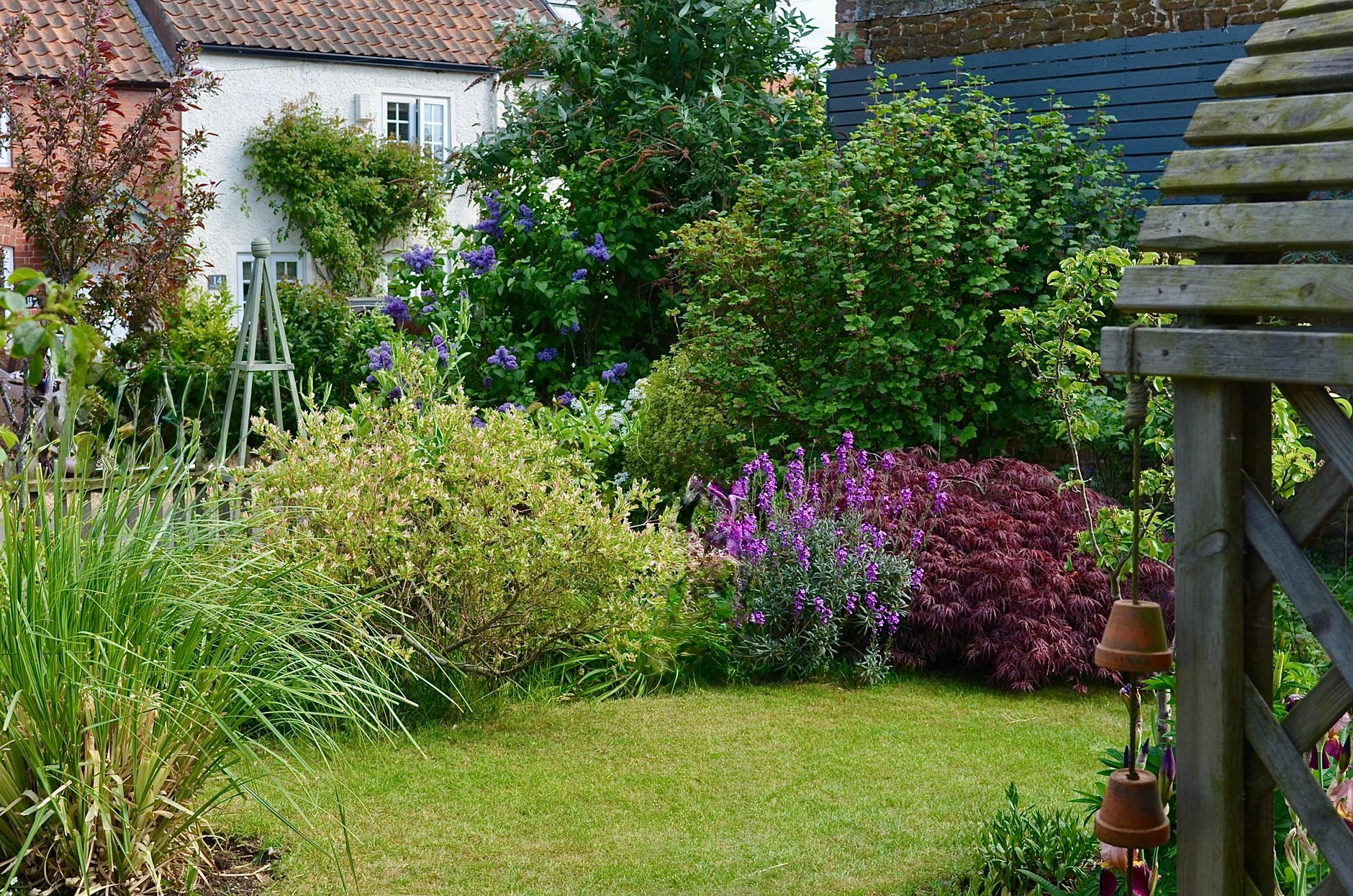
Paths: Use winding paths made of gravel, stone, or brick. Curves create a sense of discovery.
Trellises and arbors: Support climbing roses, clematis, and sweet peas. Add height and structure.
Benches: Place a wooden bench in a quiet corner for seating and enjoying the garden.
Fencing: Use rustic wooden fencing (picket or post-and-rail) for a cottage feel.
Gates: A wooden gate adds charm and frames the view.
Choose a Color Palette

Classic palette: Soft pinks, purples, whites, and blues with pops of reds, oranges, and yellows.
Monochromatic: Use different shades of one color (e.g., all pink) for a sophisticated look.
Complementary: Use colors opposite on the color wheel (e.g., purple and yellow) for contrast.
White accents: White flowers brighten shady corners and add elegance.
Foliage: Use silver, gray, and variegated foliage for contrast (lavender, artemisia, dusty miller).
Plan for Year-Round Interest

Spring (March-May): Tulips, daffodils, alliums, bleeding hearts, and early-flowering perennials.
Summer (June-August): Roses, lavender, peonies, delphiniums, foxgloves, and phlox.
Fall (September-November): Sedums, asters, ornamental grasses, and fall foliage.
Winter: Evergreen structure from boxwood, ivy, and hardy ferns. Seed heads from perennials add winter interest.
Fragrance: Include fragrant plants (roses, lavender, dianthus) for sensory appeal.
Prepare and Plant

Soil preparation: Remove weeds and add 2-3 inches of compost.
Planting time: Plant in spring or fall for the best results.
Spacing: Plant closer than recommended for a lush look—plants will fill in quickly.
Water: Water well after planting and keep the soil moist until established.
Mulch: Apply 2-3 inches of mulch to retain moisture and suppress weeds.
Maintain Your Cottage Garden

Watering: Water deeply once a week during dry spells.
Deadheading: Remove spent flowers to encourage reblooming.
Pruning: Prune roses and shrubs in late winter or spring.
Dividing: Divide overcrowded perennials every 3-4 years.
Self-seeding: Allow some plants to self-seed for a natural look.
Fertilizing: Apply compost or balanced fertilizer in spring.
Common problems and fixes
| Problem | Likely cause | What to do |
|---|---|---|
| Plants look sparse | Not planting densely enough. | Add more plants and allow self-seeding. |
| Garden looks messy | Cottage gardens are slightly wild—embrace it! | Deadhead and prune to keep it manageable. |
| Weeds taking over | Not enough mulch or dense planting. | Apply 2-3 inches of mulch and plant more densely. |
| Not enough color in fall | Not planning for fall interest. | Add sedums, asters, and ornamental grasses. |
Gardener's checklist
Test what you learned
What is the key principle of a cottage garden?
Answer: Dense, layered planting with no bare soil
Which plant is a classic cottage garden plant?
Answer: Lavender
What is the typical color palette for a cottage garden?
Answer: Soft pastels with vibrant accents
What should cottage garden paths be?
Answer: Winding and informal
How should cottage garden plants be spaced?
Answer: Closely spaced for a lush look
Common questions
What is a cottage garden?
A cottage garden is a romantic, informal style characterized by lush, overflowing plantings, winding paths, and a mix of flowers, herbs, and vegetables.
What plants are best for a cottage garden?
Classic plants include roses, lavender, foxgloves, peonies, delphiniums, hollyhocks, and hardy geraniums.
Do cottage gardens need a lot of maintenance?
Cottage gardens are low-maintenance once established. They need watering during dry spells, deadheading, and occasional pruning.
Can I grow vegetables in a cottage garden?
Yes! Traditional cottage gardens included vegetables and herbs. Mix them in among the flowers for an authentic look.
How do I make a cottage garden look romantic?
Use soft pastel colors, winding paths, rustic structures (trellises, arbors, benches), and include fragrant plants (roses, lavender).
A cottage garden is a romantic, informal style characterized by lush, overflowing plantings, winding paths, and a mix of flowers, herbs, and vegetables. Plant densely, choose a soft pastel color palette, and include classic plants like roses, lavender, and foxgloves. Add rustic structures (trellises, arbors, benches) and winding paths for charm. Cottage gardens are low-maintenance once established and attract pollinators. With careful design and plant choices, you can create a beautiful, romantic garden that feels like a peaceful retreat.
Frequently asked questions
How often should a vegetable garden be watered?
Frequency depends on weather, soil and plant size. Check the soil rather than watering on a rigid schedule.
Is compost enough fertilizer?
Compost improves soil and provides nutrients slowly. Heavy-feeding crops may still need additional feeding.

The Sproutstead Editorial Team
We create clear, practical gardening and homesteading guides designed for real homes and beginner growers.
View author profile →

