
Petunias are colorful, long-blooming annuals that brighten gardens, containers, and hanging baskets from spring until frost. Plant petunias in spring after the last frost. Choose a location with full sun (6+ hours) and well-draining soil. Plant at the same depth as the pot, spacing 6-12 inches apart depending on the variety. Water deeply once a week at the base, and fertilize with a balanced fertilizer every 2-3 weeks. Pinch back young plants to encourage branching, and deadhead spent flowers for continuous blooms. Petunias are excellent for containers, hanging baskets, window boxes, and garden beds. With proper care, they bloom continuously from spring to frost.
What you will need
Choose the Right Petunia Varieties

Grandiflora petunias produce large, showy flowers up to 4-5 inches across. They are excellent for containers and garden beds. Popular varieties include Dreams and Ultra. They are more sensitive to rain and can be damaged by heavy downpours.
Multiflora petunias produce smaller flowers (2-3 inches) but are more prolific and weather-resistant. They are excellent for garden beds, containers, and hanging baskets. Popular varieties include Wave and Easy Wave.
Trailing petunias have a cascading habit and are perfect for hanging baskets, window boxes, and containers. Popular varieties include Surfina and Wave.
Double petunias have layers of petals that resemble carnations. They are stunning in containers and garden beds. Popular varieties include Doubledip and Double Cascade.
Petunias come in nearly every color except true blue and brown. Colors include red, pink, purple, white, yellow, orange, and bicolors.
Select the Perfect Planting Location

Petunias need full sun. They require at least 6 hours of direct sunlight daily for the best blooms and compact growth.
In hot climates, afternoon shade helps protect the flowers and extend the blooming period.
Good drainage is essential. Petunias do not like wet feet and can develop root rot in poorly drained soil.
They are adaptable to a wide range of soil types but prefer average, well-draining soil with moderate fertility.
Petunias are excellent for containers, hanging baskets, window boxes, and garden beds.
Plant Petunias at the Right Time and Depth

Plant petunias in spring after the last frost. The soil should be at least 60°F.
Plant at the same depth as the pot. The crown should be at soil level.
Dig a hole twice as wide and the same depth as the root ball. Place the plant in the hole, backfill, firm gently, and water deeply.
Space plants according to the variety. Grandiflora varieties need 10-12 inches. Multiflora and trailing varieties need 6-8 inches.
For containers, use pots with drainage holes and well-draining potting mix. Space plants 4-6 inches apart for a full look.
Water and Mulch Petunias
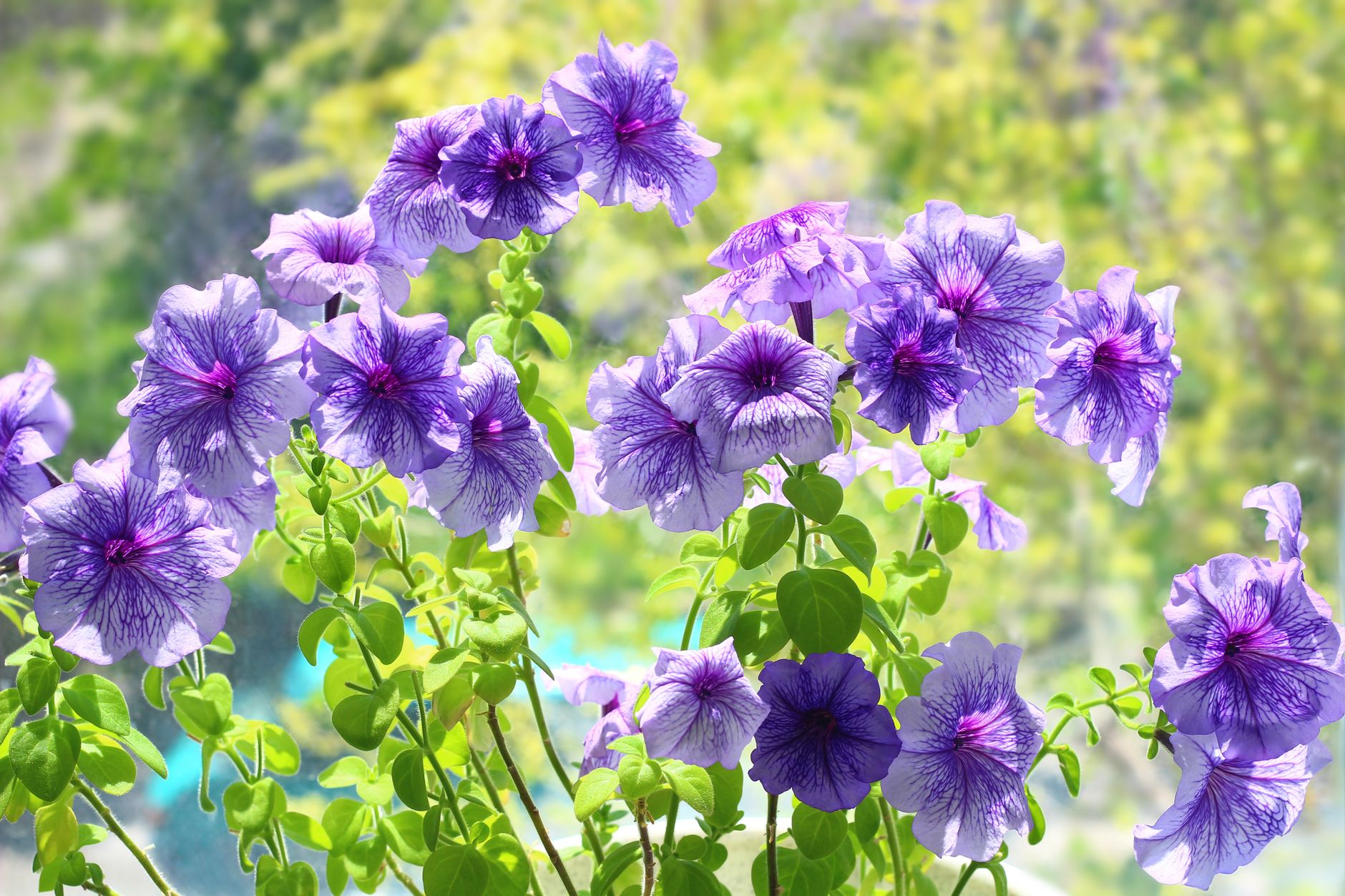
Water petunias deeply once a week, providing about 1 inch of water. In hot, dry weather, water twice a week.
Water at the base of the plant, not overhead, to prevent fungal diseases.
Petunias prefer consistent moisture but do not like soggy soil. They will wilt in dry conditions and rot in wet soil.
Apply a 2-inch layer of mulch around the plants. This keeps roots cool, retains moisture, and suppresses weeds.
In containers, check soil moisture daily. Containers dry out faster than garden beds.
Fertilize Petunias Regularly

Petunias are heavy feeders. Fertilize every 2-3 weeks with a balanced fertilizer like 10-10-10 or a bloom booster formula.
For container plants, fertilize more frequently because nutrients are washed out with watering.
Apply fertilizer according to package instructions. For liquid fertilizers, dilute to half strength to avoid burning.
Avoid high-nitrogen fertilizers. Too much nitrogen causes lush foliage at the expense of flowers.
For continuous blooms, use a fertilizer higher in phosphorus (the middle number) like 15-30-15.
Pinch and Deadhead Petunias

Pinch back young petunia plants when they reach 4-6 inches tall. Remove the center growing tip just above a set of leaves. This encourages branching and produces more flowers.
Deadhead spent flowers regularly. Remove the faded flower, including the small green seed pod behind it. This redirects energy into producing more blooms.
If the plant becomes leggy in mid-summer, cut it back by one-third. It will regrow and produce more flowers.
For self-cleaning petunias (like Wave varieties), deadheading is less essential, but it still improves appearance.
Grow Petunias in Containers and Hanging Baskets

Petunias are among the best plants for containers and hanging baskets. Their colorful blooms create a spectacular display.
Choose trailing or spreading varieties for hanging baskets. They cascade over the edges and create a waterfall of color.
Use containers with drainage holes. Petunias need good drainage.
Use well-draining potting mix. Do not use garden soil in containers.
Water container petunias daily in hot weather. They dry out faster than plants in the ground.
Fertilize container petunias every 1-2 weeks with a liquid fertilizer.
Prevent and Manage Common Problems

Aphids and spider mites can attack petunias. Use insecticidal soap or neem oil to control them. A strong spray of water can dislodge them.
Botrytis blight (gray mold) can affect petunias in humid conditions. Remove affected parts and improve air circulation.
Powdery mildew can appear in humid conditions. Prevent it by providing good air circulation and watering at the base.
Root rot occurs in poorly drained soil. Ensure good drainage and do not overwater.
Petunias can become leggy in too much shade or too much fertilizer. Move to a sunnier location and reduce nitrogen fertilizer.
Common problems and fixes
| Problem | Likely cause | What to do |
|---|---|---|
| Plants are leggy with few flowers. | Too much shade or too much nitrogen fertilizer. | Move to a sunnier location. Reduce nitrogen fertilizer. Pinch back plants. |
| Flowers are small and faded. | Not enough water or nutrients. | Water deeply once a week. Fertilize every 2-3 weeks. |
| Yellowing leaves. | Overwatering or nutrient deficiency. | Reduce watering. Apply a balanced fertilizer. |
| Gray mold on flowers and leaves. | Botrytis blight from humidity. | Remove affected parts. Improve air circulation. Avoid overhead watering. |
Gardener's checklist
Test what you learned
How much sun do petunias need?
Answer: 6+ hours
How often should you fertilize petunias?
Answer: Every 2-3 weeks
What type of petunia is best for hanging baskets?
Answer: Trailing or spreading
What should you do to encourage more blooms on petunias?
Answer: Deadhead spent flowers
Common questions
Are petunias annuals or perennials?
Petunias are tender perennials in warm climates (Zones 9-11). In colder climates, they are grown as annuals. They complete their life cycle in one season but can be overwintered indoors in some cases.
How long do petunias bloom?
Petunias bloom from spring until the first frost in fall. With regular fertilizing and deadheading, they will keep producing flowers continuously for 6-8 months.
Can I grow petunias in containers?
Yes. Petunias are excellent for containers, hanging baskets, and window boxes. Use containers with drainage holes and well-draining potting mix. Water and fertilize regularly.
Why are my petunias leggy?
Leggy petunias are usually caused by too much shade, too much nitrogen fertilizer, or lack of pinching. Move to a sunnier location, reduce nitrogen, and pinch back the stems.
Do petunias need deadheading?
Yes. Deadheading spent flowers encourages more blooms and keeps the plant looking tidy. Self-cleaning varieties like Wave petunias need less deadheading but still benefit from it.
Petunias are colorful, long-blooming annuals that bring vibrant color to gardens, containers, and hanging baskets from spring to frost. They need full sun (6+ hours), well-draining soil, and regular fertilizing every 2-3 weeks. Water deeply once a week, pinch back young plants to encourage branching, and deadhead spent flowers for continuous blooms. Choose varieties based on your space and needs—grandiflora for large flowers, multiflora for weather resistance, and trailing varieties for hanging baskets. With proper care, petunias will reward you with months of stunning color and are perfect for gardeners of all skill levels.
Frequently asked questions
How often should a vegetable garden be watered?
Frequency depends on weather, soil and plant size. Check the soil rather than watering on a rigid schedule.
Is compost enough fertilizer?
Compost improves soil and provides nutrients slowly. Heavy-feeding crops may still need additional feeding.

The Sproutstead Editorial Team
We create clear, practical gardening and homesteading guides designed for real homes and beginner growers.
View author profile →

