Japanese beetles are destructive pests that skeletonize leaves and damage a wide range of plants. The most effective natural control is hand-picking (drop them in soapy water). Use pheromone traps (place them away from plants), apply neem oil or insecticidal soap, and introduce beneficial nematodes (Heterorhabditis bacteriophora) to control grubs in the soil. Milky spore disease is an effective biological control for grubs. For severe infestations, use pyrethrin-based sprays. Prevention includes maintaining healthy plants, removing weeds, and avoiding over-fertilizing. Japanese beetles are most active in summer (June-August)—act quickly to prevent damage.
What you will need
Identify Japanese Beetles and Damage

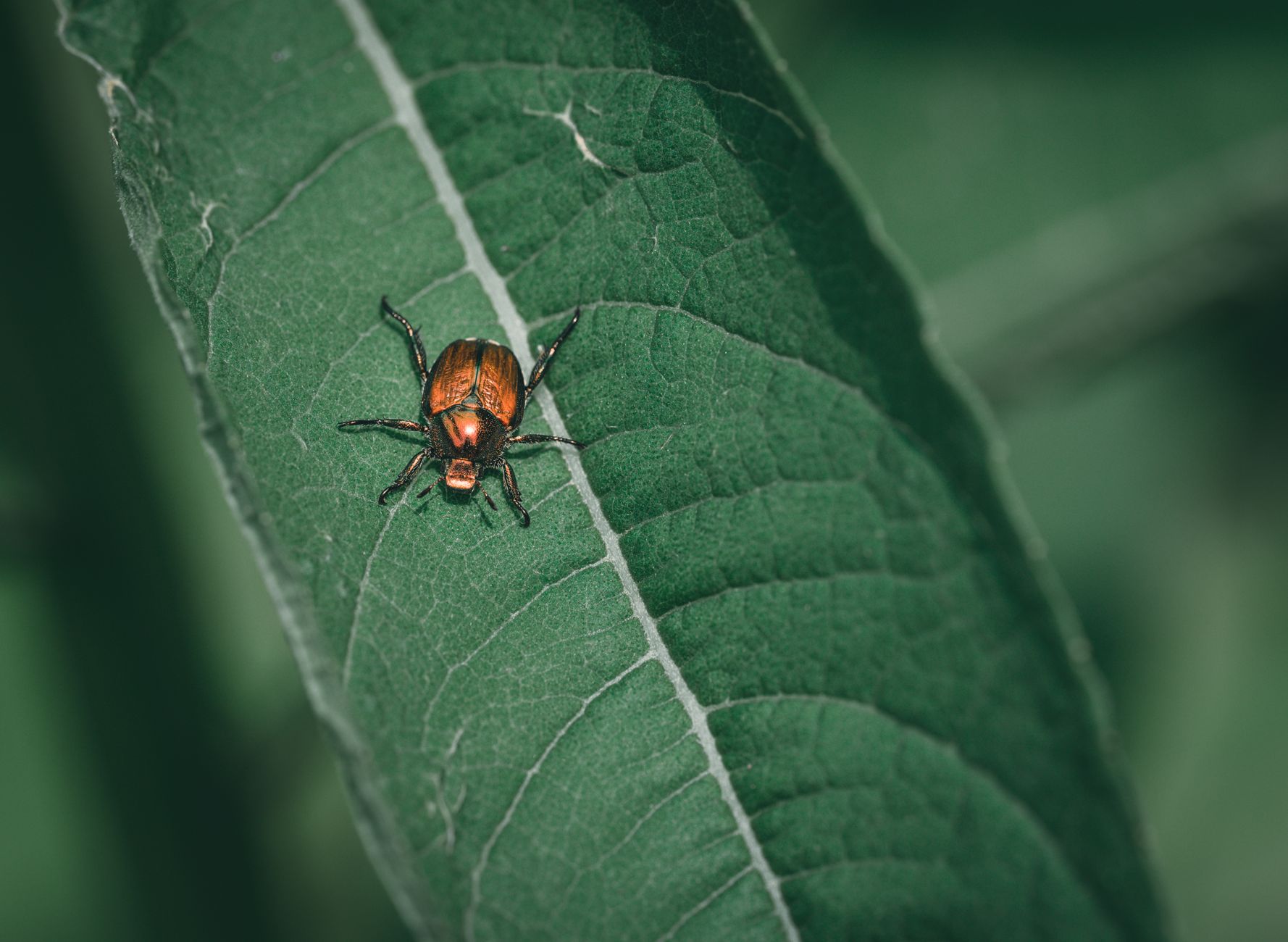
What they look like: Adults are 1/2 inch long with a metallic green head and copper-brown wings. They have white tufts along their sides.
Where to find them: On leaves, flowers, and fruits of over 300 plant species. They feed in groups.
Signs of damage: Skeletonized leaves (only veins remain), chewed flowers, and brown patches in lawns (from grubs feeding on roots).
When they're active: Adults are most active in summer (June-August), feeding during the day.
Why they're a problem: They can defoliate plants, reduce fruit production, and kill lawn grass by feeding on roots.
Hand-Pick Beetles

How it works: Hand-picking removes beetles from plants. It's effective for small infestations.
How to do it: Knock beetles into a bucket of soapy water. They'll drown.
Best time: Early morning or late evening when beetles are less active.
Frequency: Hand-pick daily during the peak season (4-6 weeks).
Tip: Use a bucket with a wide opening and hold it under the branch while shaking.
Use Pheromone Traps Carefully

How it works: Pheromone traps attract male beetles, reducing the population.
How to use: Place traps at least 50-100 feet away from plants you want to protect.
When to use: Set traps in early summer (June) before beetles emerge.
Caution: Traps can attract more beetles to your yard. Use them with caution.
Alternative: If you have a small garden, avoid traps and use other methods.
Apply Neem Oil
How it works: Neem oil contains azadirachtin, which disrupts beetle feeding and reproduction. It also acts as a repellent.
How to use: Mix 1-2 teaspoons of cold-pressed neem oil with 1 quart of warm water and a few drops of mild soap. Spray on affected plants.
Application: Apply every 7-14 days, especially during the beetle season.
Benefits: It's safe for beneficial insects when applied correctly.
Tip: Spray in the evening to avoid burning leaves.
Introduce Beneficial Nematodes

How it works: Nematodes (Heterorhabditis bacteriophora) infect and kill beetle grubs in the soil.
When to apply: Apply in late summer (August-September) when grubs are actively feeding.
How to apply: Follow package instructions. Mix with water and apply to lawns and garden beds.
Benefits: It's safe for pets, wildlife, and beneficial insects.
Long-term control: Nematodes establish in the soil and provide ongoing control.
Use Milky Spore
How it works: Milky spore (Bacillus popilliae) is a bacterium that infects and kills Japanese beetle grubs.
How to apply: Apply to lawns in spring or fall. Follow package instructions.
Benefits: It's safe for pets, wildlife, and beneficial insects.
Long-term control: Once established, milky spore can persist in the soil for 10+ years.
Patience: It takes 2-3 years to build up effective levels in the soil.
Use Pyrethrin-Based Insecticides

How it works: Pyrethrin is a natural insecticide derived from chrysanthemums. It kills beetles on contact.
When to use: Use for severe infestations or when other methods haven't worked.
Application: Spray directly on beetles in the evening. Follow label instructions.
Caution: Pyrethrin is toxic to bees and beneficial insects. Use sparingly.
Safety: Wear gloves and protective clothing when applying.
Prevent Future Infestations

Maintain healthy plants: Healthy plants are less attractive to beetles. Water and fertilize properly.
Remove weeds: Weeds attract beetles and provide food sources.
Avoid over-fertilizing: Excess nitrogen attracts beetles.
Plant resistant varieties: Some plants are less attractive to Japanese beetles.
Rotate crops: Crop rotation reduces grub populations in the soil.
Common problems and fixes
| Problem | Likely cause | What to do |
|---|---|---|
| Beetles returning quickly | Not treating grubs in the soil or re-infestation from nearby areas. | Treat grubs with nematodes or milky spore. Use multiple control methods. |
| Traps attracting more beetles | Traps placed too close to plants. | Move traps at least 50-100 feet away from plants. |
| Neem oil not working | Applied too late or not enough coverage. | Apply early in the season. Spray thoroughly on all leaf surfaces. |
| Lawn damage from grubs | Grubs feeding on roots. | Apply beneficial nematodes or milky spore in late summer. |
Gardener's checklist
Test what you learned
What is the most effective natural control for Japanese beetles?
Answer: Hand-picking
What do Japanese beetles feed on?
Answer: Leaves, flowers, and fruits
What is a biological control for Japanese beetle grubs?
Answer: Milky spore
How far away from plants should beetle traps be placed?
Answer: 50-100 feet
When are Japanese beetles most active?
Answer: Summer (June-August)
Common questions
Do Japanese beetles bite humans?
No, Japanese beetles don't bite humans. They feed on plant material only.
Can Japanese beetles kill trees?
Yes, severe infestations can defoliate and weaken trees, especially young trees.
What is the best time to treat for Japanese beetles?
Adult beetles are most active in summer (June-August). Apply treatments early in the season for best results.
Do Japanese beetles have natural predators?
Yes, birds, parasitic wasps, and tachinid flies are natural predators of Japanese beetles.
Can I use vinegar to kill Japanese beetles?
Vinegar can kill beetles on contact but may damage plants. Use with caution.
Japanese beetles are destructive pests that can skeletonize leaves and damage many plants. The most effective approach is a combination of hand-picking, biological controls (neem oil, nematodes, milky spore), and cautious use of pheromone traps. Treat grubs in the soil in late summer to prevent future infestations. Maintain healthy plants and avoid over-fertilizing to reduce beetle attraction. With persistence and a multi-method approach, you can control Japanese beetle populations and protect your garden.
Frequently asked questions
How often should a vegetable garden be watered?
Frequency depends on weather, soil and plant size. Check the soil rather than watering on a rigid schedule.
Is compost enough fertilizer?
Compost improves soil and provides nutrients slowly. Heavy-feeding crops may still need additional feeding.

The Sproutstead Editorial Team
We create clear, practical gardening and homesteading guides designed for real homes and beginner growers.
View author profile →