Ants in the garden are usually beneficial, but they can become a problem when they farm aphids, disturb plant roots, or enter your home. To control ants, use bait traps with borax and sugar (1 part borax to 3 parts sugar) or commercial ant baits. Apply diatomaceous earth around plants and ant trails to dehydrate and kill ants. Use cinnamon, vinegar, or peppermint oil as natural repellents. Create barriers with food-grade diatomaceous earth or sticky traps around plants. For fire ants, use mound treatments or boiling water. Prevention is key: remove food sources, seal entry points, and control aphids (which attract ants).
What you will need
Understand Ants in the Garden

Why they're there: Ants are attracted to gardens by food sources (honeydew from aphids, seeds, fruits) and nesting sites.
Beneficial: Ants aerate the soil and eat some pests.
Problematic: They farm aphids (protecting them from predators), disturb plant roots, and can enter homes.
When to control: Control ants when they become a nuisance, are farming aphids, or entering your home.
Important: Not all ants are bad—focus control on problematic species.
Use Borax and Sugar Bait

How it works: Worker ants carry the bait back to the colony, where it kills the queen and colony.
Recipe: Mix 1 part borax with 3 parts sugar. Add enough water to make a paste.
How to use: Place small amounts of bait near ant trails and nests.
Safety: Borax is toxic to pets and children—place bait in secure containers.
Commercial baits: Available at garden centers for convenience.
Apply Diatomaceous Earth

How it works: Diatomaceous earth is made from fossilized algae. The sharp edges cut the ant's exoskeleton, causing dehydration and death.
How to use: Sprinkle a ring of diatomaceous earth around plants, nests, and ant trails.
Food-grade: Use food-grade diatomaceous earth for safety.
Reapplication: Reapply after rain and every 1-2 weeks.
Caution: Avoid applying directly on plant flowers—it can harm pollinators.
Use Natural Repellents

Cinnamon: Sprinkle cinnamon powder around plants and ant trails. It disrupts their scent trails.
Vinegar: Mix equal parts vinegar and water. Spray on ant trails and entry points.
Peppermint oil: Mix 10-15 drops of peppermint essential oil with water. Spray around garden and entry points.
Citrus peels: Place citrus peels near ant trails—ants dislike the smell.
Reapplication: Reapply after rain and every 1-2 weeks.
Use Boiling Water on Nests

How it works: Boiling water (212°F) kills ants and destroys the nest.
How to use: Pour boiling water directly on ant nests, mounds, and visible ant trails.
Best for: Small nests and fire ant mounds.
Safety: Be careful—boiling water can burn you. Wear long sleeves and gloves.
Reapplication: Repeat as needed for stubborn colonies.
Create Barriers

Sticky traps: Place sticky traps (like Tanglefoot) around tree trunks and plant stems.
Diatomaceous earth ring: Create a ring around plants to prevent ants from reaching them.
Copper tape: Copper tape around raised beds and pots repels ants.
Cinnamon barrier: Sprinkle cinnamon powder around plants.
Maintenance: Check barriers regularly and reapply as needed.
Control Aphids to Eliminate Ants
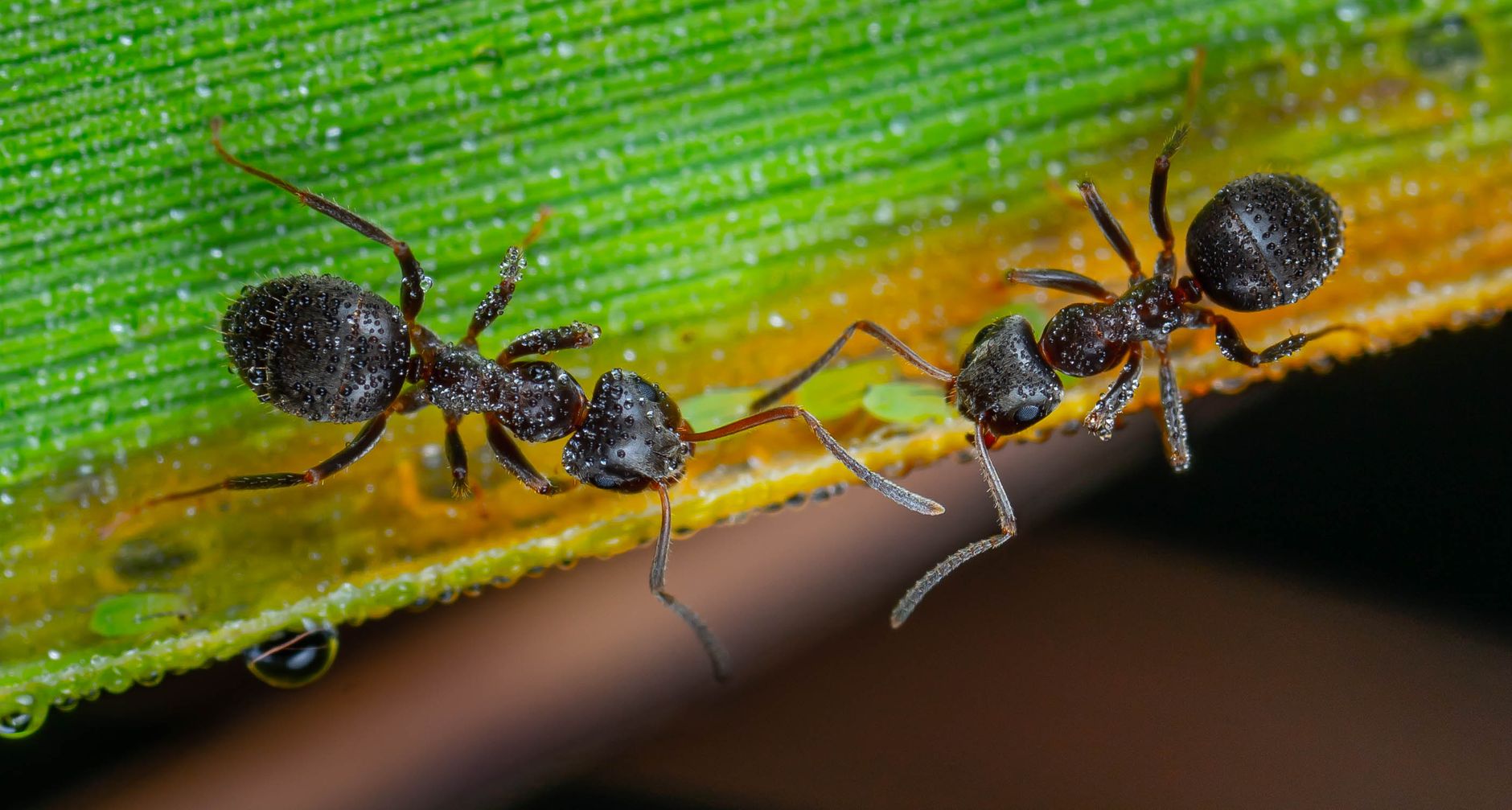
Why it matters: Ants farm aphids for their honeydew. Controlling aphids reduces the ant population.
How to control aphids: Use insecticidal soap, neem oil, or introduce ladybugs.
Benefits: Fewer aphids = fewer ants.
Long-term solution: Address the aphid problem to stop ants.
Monitoring: Check plants regularly for aphids and treat early.
Prevent Future Ant Problems

Remove food sources: Clean up fallen fruit, crumbs, and pet food.
Seal entry points: Seal cracks and gaps in your home's foundation.
Control aphids: Keep aphid populations low.
Keep garden clean: Remove debris and keep the garden tidy.
Monitor: Check your garden regularly for signs of ant activity.
Common problems and fixes
| Problem | Likely cause | What to do |
|---|---|---|
| Ants returning quickly | New colonies or food sources attracting them. | Remove food sources and use baits to target the colony. |
| Baits not working | Wrong ratio or ants not taking the bait. | Use the 1:3 borax-to-sugar ratio. Try commercial baits. |
| Repellents not working | Not reapplying or ants finding alternative routes. | Reapply regularly and create physical barriers. |
| Fire ant mounds | Fire ant infestation. | Use boiling water or fire ant mound treatments. Professional help may be needed. |
Gardener's checklist
Test what you learned
What is the most effective ant bait recipe?
Answer: 1 part borax + 3 parts sugar
What natural powder dehydrates and kills ants?
Answer: Diatomaceous earth
What plant pest do ants farm for honeydew?
Answer: Aphids
What is a natural ant repellent?
Answer: Cinnamon
What should you do to prevent ants in the garden?
Answer: Remove food sources
Common questions
Are ants bad for gardens?
Ants can be beneficial (aerating soil) but become problematic when they farm aphids, disturb roots, or enter homes.
Does vinegar kill ants?
Vinegar repels ants and disrupts their scent trails. It kills ants on contact but is not a long-term solution.
How do I get rid of fire ants?
Use boiling water on mounds, commercial fire ant baits, or professional pest control services.
Do coffee grounds repel ants?
Coffee grounds are sometimes used as a repellent, but they're not as effective as cinnamon, vinegar, or peppermint oil.
Can I use bleach to kill ants?
Bleach can kill ants but is toxic to plants and the environment. Not recommended for garden use.
Ants in the garden can be a nuisance, but you can control them with natural methods. Use borax and sugar bait (1 part borax to 3 parts sugar) to target the colony. Apply diatomaceous earth around plants and ant trails to dehydrate and kill ants. Use cinnamon, vinegar, or peppermint oil as natural repellents. Control aphids to reduce the ant population—they're attracted to aphid honeydew. Remove food sources and seal entry points to prevent future problems. With persistence and a multi-method approach, you can keep ants under control in your garden.
Frequently asked questions
How often should a vegetable garden be watered?
Frequency depends on weather, soil and plant size. Check the soil rather than watering on a rigid schedule.
Is compost enough fertilizer?
Compost improves soil and provides nutrients slowly. Heavy-feeding crops may still need additional feeding.

The Sproutstead Editorial Team
We create clear, practical gardening and homesteading guides designed for real homes and beginner growers.
View author profile →